
All Just Walking Each Other Home
Roaming my old streets in south-west London today, the years collapsed into one another. This is a reflection on sobriety, memory, and the quiet strength we borrow from each other, one day at a time.

This weekend I’ve been ambling about my old stomping ground, the streets I lived and worked in for so many years in Chelsea and Fulham. South West London. Coming back here always does something provocative to my nervous system. It’s like stepping through a rip in time because so much feels unchanged. Or maybe it’s that I’m changed, and the contrast is what makes that sharp.
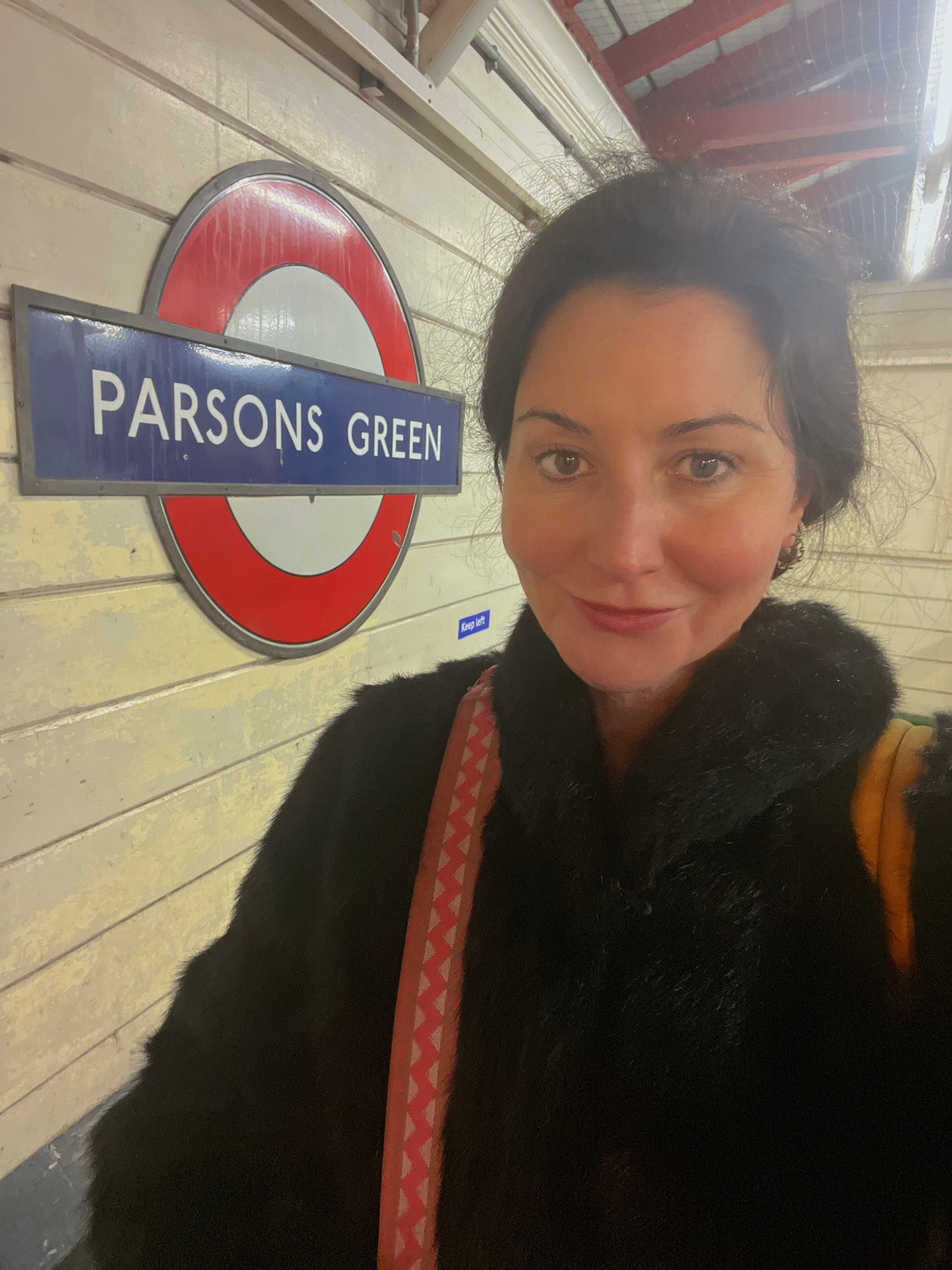
I don’t spend much time here anymore. Rural Scotland has changed my life-pace completely. But London still holds versions of me. It’s as though the buildings remember bits of me, even when I’m trying to move on.
Yesterday I went to a lunch event at The Hollywood Arms, a place where, in my early twenties, I used to drink myself into oblivion.
I don’t do that anymore. I’m long-time sober now.
Standing there, in the familiar old room with the same hum of “normal life”, it was sobering in every sense. It took me straight back to the days when I would get blackout drunk and wake the next morning with that familiar dread. How did I get home? What did I say? What did I do? Who did I offend? What did I break, or lose, or give away?
Then this afternoon I found myself visiting at Chelsea and Westminster Hospital, a place that carries tenderness and discomfort in equal measure. It’s where I gave birth to my first two children. Walking through the foyer, I saw a young couple leaving with a newborn in a car seat. Nervous. Excited. Full of that stunned joy. And my whole body was pulled back in time.
I was suddenly back on that monumental, life-changing day when my ex-husband and I walked out with our most precious infant cargo. Hope and fear in equal amounts. Bewildered that we had become parents. That suddenly we were guardians of an entire human life.
With our firstborn, I remember being utterly terrified. Walking out into those main roads around Fulham with the lorries rattling past and throngs of cars and thinking, how is it that I am responsible for this little human life? The responsibility felt enormous, almost unfathomable.
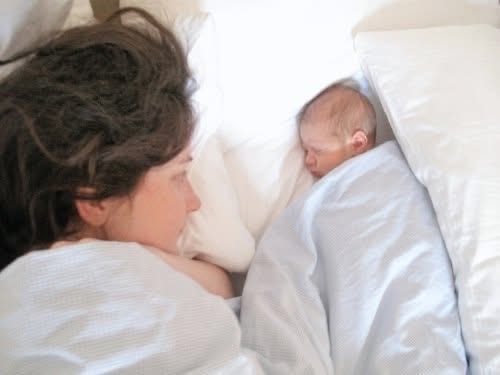
And yet somehow we muddled through. And that tiny baby is now a strapping, six-foot-plus young man who could pass for someone in his twenties, and still it can feel like yesterday he was in my arms. It’s as though time is both endless and gone in an instant.
It’s the collapsing of time that’s stirring me today. One minute I’m forty-eight, walking around calm and capable. The next I’m whipped back to twenty-three year old me, frantic and lost and trying to fix myself with anything I can get my hands on.
Because the truth is, I spent years trying to find a toolkit for adult life in all the wrong places.
I tried to find it at the bottom of a glass. In being relentlessly “good” (As a ‘Snowy Owl’ at the Brownies, as a private in the territorial army... there’s a long list of hats I tried on). I tried to find peace in being useful. In structure, in achievement, in professional roles that looked impressive on paper. I tried to marathon-run myself into wholeness. I wanted to attach myself to a version of life that others would respect, and that would maybe, just maybe help ease some of the shame and help me feel normal.
And under all of that, I was terrified. I didn’t know how to be a grown-up. I didn’t know how to be a woman. I didn’t know how to reliably care for myself. I was afraid that if I didn’t get help, I would die, either by my own hand or by the slow chaos of self-abandonment. And many people do die that way. I have known too many of them.
There is one place in this part of London that holds a different kind of memory for me. St Columba’s Church on Pont Street. A Church of Scotland church in London, and one of the most sacred points on my personal map of survival. It’s where I first started regularly going to Alcoholics Anonymous meetings. It’s where I learned the only toolkit that ever really worked for me. The 12-step programme.
People may scoff at how trite that sounds, or flinch at it’s use of the word ‘god’ and assume it’s about rules or religion. But for me it was/is a lifeline. A structure that didn’t shame me. A set of practices that returned me to reality. A room where I didn’t have to pretend.
The beauty of AA is you stop imagining you are uniquely broken. You begin to understand everybody is carrying so much. So much hope. So much sadness. So much fear. The daughter whose father has died and she’s exhausted from weeks of vigil at his bedside. The husband who has lost a young adult son to cancer and is trying to cope with his wife who is mad with grief. The primary school teacher terrified about how she’ll get through her father’s terminal illness without a drink. So many people carrying burdens and yet still showing up, still trying.
And the strength is simple. If the next person got through it, maybe I can too. If they weathered that storm, maybe I can weather mine. One day at a time.
Being back here also brings up grief. Grief for the years I wasted. Grief for how close I came to not making it. I remember the night I cycled home in blackout after impromptu after-work drinks. I woke up the next day not sure how I’d made it back, my body covered in gashes and deep bruises. A kind woman later arrived with my mangled bike to check I was still alive.
Those memories sit right next to the memories of my babies. That’s part of the dizziness of today, the way one life can hold so many different lives inside a moment, a postcode.
Now I work in hospitals and try not to visit them as an A&E patient. Now I witness the endless rhythmic flow and passage of humans day in and day out. Babies arriving. Lives ending. Families holding hands. People trying. It’s humbling. It’s grounding. It makes everything feel both devastatingly fragile and strangely ordinary.
It also reminds me how easy it is, when we’re momentarily hoodwinked by triggered human-ness to be pulled off course. To create superfluous problems where they’re un-needed. To project. To grasp for intensity. To confuse drama with depth. There is drama enough when it comes with necessity.
I keep reminding myself, things don’t have to be excessively dramatic. Life can be steady. It can be safe.
When I stop trying to figure everything out from my small human mind and I ask for help from my Higher Power, from spirit, from my ancestors, god (whatever you want to call that force that is way bigger than any of us!) something arrives in me. Not as fireworks. As steadiness. As a quiet inner ‘yes’. Complete faith, certainty beyond logic, that I’m being held.
Not safe in the brittle, materialistic worldly sense, but safe in my body. Safe in my heart. Safe in my inner world. Safe because I’ve got a scared relationship with my Higher Power that nobody can take away from me. Safe because I am being carried by love.
And then sometimes swiftly, sometimes slowly, beautiful things happen, one day at a time.
And then suddenly I wake up decades later still sober, still alive, looking forward to another Christmas, feeling like I am living on borrowed time.
Today I feel the threads of it all. The twenty-three-year-old me walking into her first AA meetings on Pont Street. The young mother leaving the hospital terrified with her newborn baby in a car seat. The woman I am now walking these streets with tears close to the surface, grateful and sad and steady all at once.
Time passes. Souls come and go. We fall in love, we fall out of love. And if we’re lucky, old romantic love transforms into deep respect and friendship without resentment, without drama, without fear.
Underneath all of it is that is one simple invitation. To walk ourselves home to forever as consciously and as safely as we can, whilst holding the hands of others along the way. Whilst walking each other home.
It feels poignant. It feels painfully beautiful.
#andsoitis
Please note ‘All Just Walking Each Other Home’ is an original quote from the amazing human Ram Dass. It's a quote I try to live by.